


The Application of Activated Carbon in Desulfurization and Denitrification at Gas Treatment Plants
Rapid industrialization has made gas treatment a critical link in both environmental protection and energy use. Among industrial off-gases, SO₂ and NOx are the dominant pollutants, damaging the atmosphere and triggering acid rain and photochemical smog. Efficient, low-cost desulfurization and denitration are therefore urgent. Thanks to its outstanding adsorption capacity, activated carbon is now widely adopted in gas-treatment plants as a key tool for removing these oxides.
Activated carbon is a porous carbon with enormous surface area and rich micropores that readily capture airborne contaminants. It works through two parallel routes: physical adsorption, in which SO₂ and NOx molecules are trapped inside the pore network, and chemical adsorption, in which surface functional groups react with the pollutants to form stable compounds that remain fixed on the solid.
For sulfur removal the carbon is used in dry-scrubbing mode. While the flue gas passes through a carbon bed, SO₂ is adsorbed and, in the presence of O₂ and H₂O, catalytically oxidized to sulfuric acid that stays inside the pores; the acid can later be recovered as a saleable product. Compared with wet limestone scrubbing, this route is simpler, low-energy and free of liquid waste, making it attractive for small- and medium-scale gas-cleaning plants.
Nitrogen-oxide control is equally effective. Ordinary adsorbents hardly remove NO, but carbon surfaces catalyze its low-temperature oxidation to NO₂, which is then either adsorbed or further converted to harmless species. When ammonia is injected, the carbon acts as an SCR catalyst that reduces NOx to N₂ and H₂O with >90 % efficiency, a scheme already common in power and chemical plants.
The material's advantages go beyond high removal rates. Thermal or steam regeneration allows many reuse cycles, cutting operating cost, while feedstocks such as coal, wood or coconut shell keep prices moderate. Challenges remain-saturation at high pollutant loads and possible activity loss during regeneration-so carbon type and operating conditions must be tailored to each gas stream.
In short, activated carbon is an efficient, versatile adsorbent that can hardly be replaced for simultaneous SOx/NOx control. It removes hazardous gases, permits resource recovery and holds down cost, fully aligning with sustainable-development goals. Continued innovation will further expand its role in environmental protection and industrial gas governance.
Activated carbon for desulfurization and denitrification in gas treatment plants
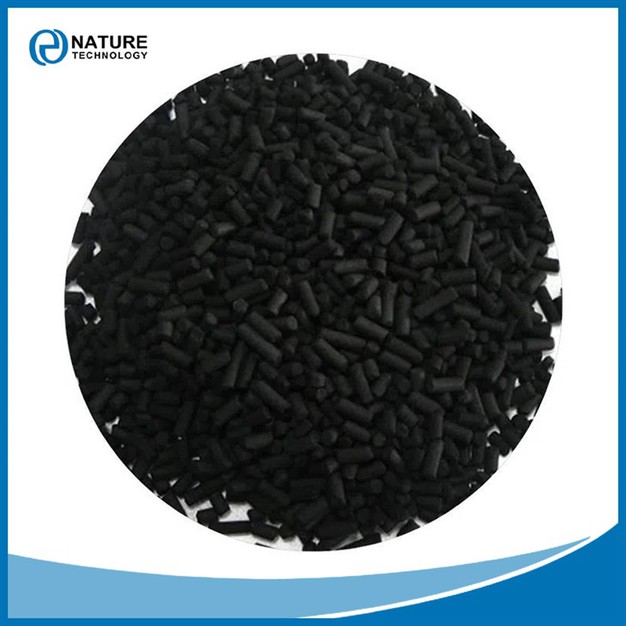
Product Description:
Coal-based granular activated carbon HNC Series
This coal-based granular activated carbon is engineered for sintering flue gas from steel plants, power plants and large boilers. In one pass it removes SO₂, NOx, Hg, As, dioxins and dust; it also traps other toxic metals from coal combustion. Simple to make from abundant feedstock, it needs low capital and little space. Widely used for simultaneous desulfurization and denitration in thermal power, iron & steel, non-ferrous smelting, cement, waste incineration and industrial furnaces, it operates stably, can be regenerated and keeps operating costs low, offering a one-stop adsorbent for integrated flue-gas cleaning.