


The Application of Activated Carbon in the Food Coloring Industry
Activated carbon has become an indispensable adsorbent in the food coloring industry, leveraging its unique porous structure and high adsorption capacity to ensure product purity, safety, and aesthetic quality. It plays a crucial role in both natural and synthetic food coloring processing, addressing color irregularities and impurity issues.
The core application of Activated carbon lies in decolorization and purification. During food coloring production, raw materials may contain unwanted pigments, precursors, or contaminants that affect hue consistency. Activated carbon's well-developed pore network-including micropores, mesopores, and macropores, effectively traps pigment molecules of varying sizes. For instance, it removes caramel pigments in sugar-based colorants and chlorophyll residues in natural plant-derived colors, enhancing clarity without altering the target color profile.
Powdered activated carbon and granular activated carbon are the primary types used. PAC powdered activated carbon is preferred for batch processing of liquid colorants due to its high adsorption efficiency and fast reaction rate, while GAC granular activated carbon suits continuous filtration systems for large-scale production. Key performance indicators like iodine value and methylene blue adsorption value determine Activated carbon's suitability for different pigment molecular weights.
Safety is paramount, so food-grade Activated carbon must comply with international standards such as the Food Chemicals Codex, with strict limits on heavy metals and ash content (<5%). Beyond decolorization, it also removes off-odors and harmful contaminants like polycyclic aromatic hydrocarbons, ensuring food colorants meet safety regulations. Its non-toxic, physical adsorption nature preserves the nutritional integrity of natural colorants, making it a trusted solution in the industry.
Activated carbon for food coloring industry
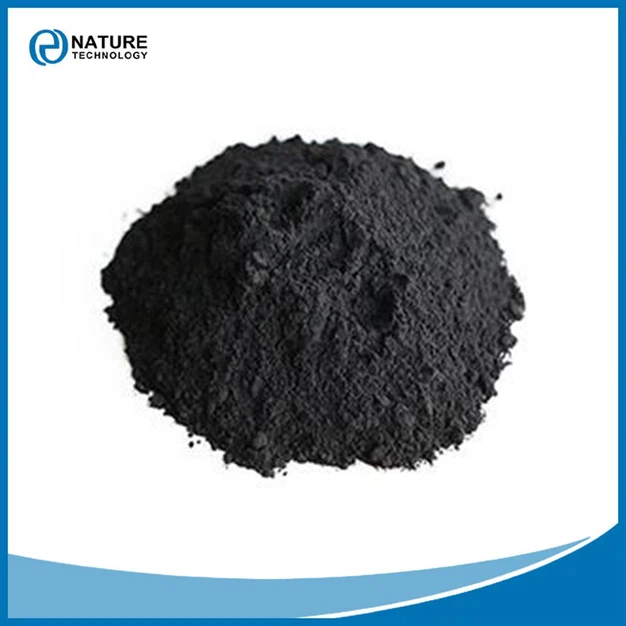
Wood based powdered activated carbon is made from high quality sawdust. It is non-toxic and tasteless black powder.
Characteristics: It has well-developed mesoporous structure and high specific surface area. It has strong adsorption capacity and fast filtration speed. It has excellent decolorization and purification performance.
Application: It is suitable for decolorization and purification of sugar, pharmaceuticals, beverages, alcoholics, edible oils and other food industries. It is also widely used in decolorization, refining and purification of organic solvents, water purification industry,drinking water purification.