


Activated carbon is a material widely used in various fields. Boasting excellent adsorption capacity, it can efficiently remove impurities and pollutants from water and air, playing a vital role in environmental protection, medical care, industrial production and other sectors.
Functions of Activated Carbon
As a porous material with extremely strong adsorption capacity, activated carbon can effectively eliminate impurities and hazardous substances in water or air. Its purification mechanism works by adsorbing harmful contaminants onto its surface. It has extensive applications in water treatment, air purification, healthcare and many other fields.
Characteristics of Powdered Activated Carbon (PAC)
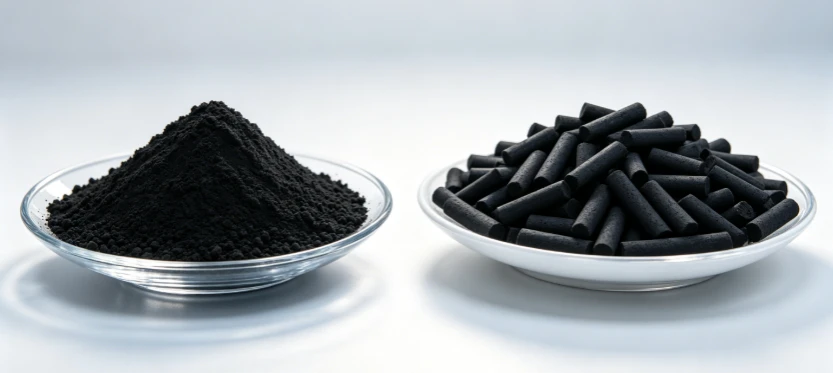
Powdered activated carbon is a prominent form of activated carbon worthy of close attention. Distinguished by its fine granular form, it is commonly deployed as an adsorbent to treat specific types of pollutants. It appears as fine powder, manufactured through processes including carbonization, activation and grinding.
One core feature of PAC is its superior adsorption performance. Its tiny particle size delivers a relatively large specific surface area, enabling more efficient capture of hazardous pollutants, which makes it highly effective for pollutant removal in both gaseous and liquid media.
In addition, PAC features good miscibility and can be easily blended with other materials to boost adsorption efficiency. This property supports its broad adoption in pharmaceuticals, food processing and other industries, offering reliable purification solutions for diverse industrial workflows.
Characteristics of Columnar Activated Carbon (CAC)
Columnar activated carbon is a mainstream form of activated carbon. Its unique cylindrical shape grants it outstanding advantages in adsorption and filtration. Produced via sophisticated manufacturing techniques, it features a uniform pore structure, resulting in a large specific surface area and powerful adsorption capacity.
Compared with PAC, CAC is better suited for systems requiring continuous long-term operation, such as water treatment facilities and air purifiers. Its cylindrical shape allows stable fixation inside equipment without scattering, lifting overall operational efficiency.
Widely utilized across industries, CAC fits both gas-phase and liquid-phase adsorption applications. Its shape facilitates convenient packaging and replacement, cutting maintenance costs and simplifying operation.
Comparison Between Powdered and Columnar Activated Carbon
Many users struggle to distinguish powdered and columnar activated carbon, as the two types differ noticeably in adsorption performance, application methods and applicable scenarios. PAC exists as fine powder, while CAC comes in solid cylindrical extrudates.
PAC generally possesses a larger specific adsorption surface area, meaning it can adsorb contaminants at a faster rate. In contrast, the special structural design of CAC delivers superior performance in fluid treatment and gas filtration.
The selection of activated carbon hinges on actual application scenarios and requirements. PAC is the preferable option for rapid adsorption and bulk removal of pollutants, whereas CAC is more suitable when consistent long-term filtration performance is required.
Whichever type you choose, ensure its quality and performance match your operational demands. Comparing the pros and cons of PAC and CAC helps clarify their differences, supporting informed decisions tailored to your unique application.
How to Choose the Right Activated Carbon
The key to selecting suitable activated carbon lies in clarifying your actual demands and specific working conditions. First, identify the type and concentration of pollutants to be treated to determine the required adsorption capacity. Second, decide on the carbon form: opt for PAC if a large adsorption surface area is prioritized, or CAC for sustained filtration performance.
You also need to examine the production process and quality of activated carbon to select standard-compliant products. Understanding raw material sources and manufacturing workflows further helps evaluate its compatibility with your usage. Finally, factor in procurement cost and replacement frequency based on your budget and service life to achieve a cost-effective solution.


