Pellet coconut-shell activated carbon is an excellent adsorbent material widely used in various sectors. Thanks to its unique structure and superior properties, it has become an indispensable material for environmental governance, medical and health care, food industry and other fields.
In environmental governance, pellet coconut-shell activated carbon is extensively adopted in water treatment, air purification and waste-gas treatment. Its strong adsorption capacity can efficiently remove heavy metals, organic substances and odours from water to safeguard water quality. Meanwhile, in air purification, it adsorbs harmful gases in the air and improves environmental quality.
In the medical and health-care sector, pellet coconut-shell activated carbon is applied in drug purification, toxicant adsorption and oral care. Its outstanding adsorption performance effectively eliminates impurities in pharmaceutical products to guarantee drug quality. It can also adsorb toxins and exert a detoxifying effect for human-health protection.
Likewise, its applications in the food industry should not be overlooked. It is used for food purification, decolorization and odour elimination to ensure food safety and quality. By adsorbing impurities and hazardous substances, it preserves the freshness and purity of food and enhances consumers' eating experience.
Preparation Methods of Pellet Coconut-Shell Activated Carbon
The preparation of pellet coconut-shell activated carbon involves a series of sophisticated procedures to secure excellent performance and adsorption capacity of finished products. First of all, selecting high-quality coconut-shell feedstock is critical. Activated Carbon enjoys a high reputation in this field owing to abundant raw-material resources and advanced production technologies.
Next, coconut shells undergo carbonization, in which high-temperature heating converts them into carbon-based materials. This process removes impurities from coconut shells and boosts the purity and adsorption performance of activated carbon. During carbonization, Activated Carbon strictly controls temperature and duration to achieve optimal carbonization outcomes.
Activation follows afterwards. Activated carbon is subjected to chemical or steam treatment to develop its pore structure and enlarge specific surface area, so as to raise adsorption capacity. This vital procedure determines the performance of activated carbon. With innovative activation technologies, Nature Activated Carbon keeps upgrading product quality.
Diverse preparation techniques exert influences on final-product performance. Variations in raw-material selection, carbonization temperature and activation methods lead to differences in pore structure and adsorption properties of activated carbon. In research and development, Nature Activated Carbon continuously optimizes preparation processes to manufacture higher-grade columnar coconut-shell activated carbon.
Applications in Environmental Governance
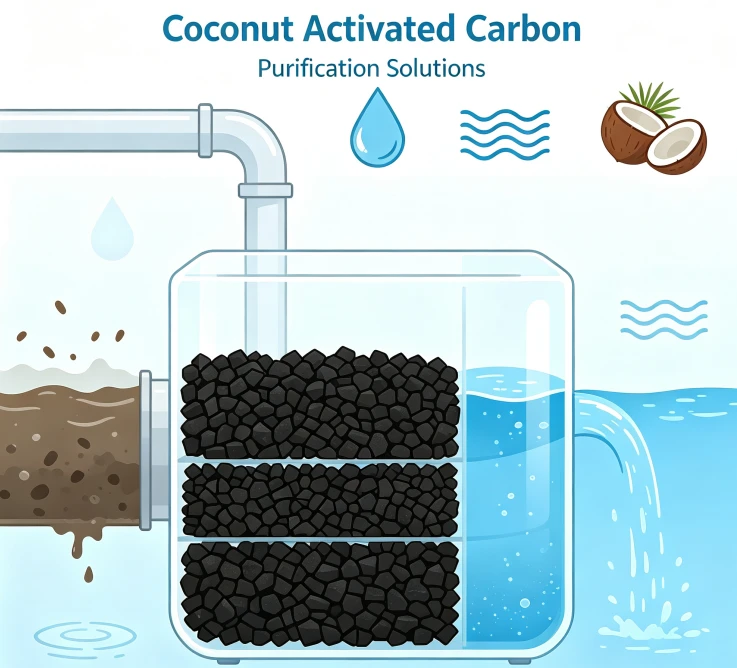
Pellet coconut-shell activated carbon boasts extensive and far-reaching applications in environmental governance. Its remarkable adsorption properties make it a premium material for water treatment and air purification. For water treatment, it efficiently removes organics, odours and heavy metals from water for cleaner and safer water supplies. In air-purification scenarios, it adsorbs harmful gases and malodours to improve air quality for fresher breathing.
Moreover, pellet coconut-shell activated carbon plays a significant role in waste-gas treatment. Relying on its outstanding adsorption capacity, it purifies hazardous substances contained in industrial waste gas, mitigates air pollution and protects the environment. As a premium-grade brand, Nature Activated Carbon delivers reliable support and solutions for governance projects across industries.
In practical deployment, pellet coconut-shell activated carbon can be flexibly fitted into various facilities and equipment such as fixed-bed adsorbers and fluidized-bed adsorbers for convenient environmental-governance operations. Its merits lie not merely in adsorption efficiency but also in long-term stability and sustainability, delivering consistent support for environmental-protection work.
Applications in Medical and Health-care Sector
Pellet coconut-shell activated carbon performs key functions in medical and health care. It is widely deployed for drug purification, toxicant adsorption and oral care and provides effective solutions for the medical industry.
Firstly, it occupies a pivotal position in drug purification. Leveraging its superior adsorption capacity, it removes impurities and hazardous components from pharmaceuticals and ensures drug purity and safety. The application of Nature Activated Carbon in this field has gained wide recognition.
Secondly, pellet coconut-shell activated carbon achieves excellent results in toxicant adsorption. In emergency treatment and clinical therapy, activated carbon rapidly adsorbs toxins, lowers toxic absorption and produces detoxifying effects, which is critical to saving patients' lives.
In addition, it features unique applications in oral care. It effectively eliminates oral malodour and adsorbs bacteria and harmful substances to maintain oral hygiene and health. Incorporated into oral-care goods, Activated Carbon is well-received by consumers.
Applications in Food Industry
Pellet coconut-shell activated carbon represents a vital material with broad applications in the food industry. It plays essential roles in food purification, decolorization and odour elimination. With excellent adsorption and filtration effects, Nature Activated Carbon is widely adopted in food processing to guarantee food quality and safety.
For food purification, pellet coconut-shell activated carbon eliminates impurities, heavy-metal ions and hazardous substances from food and enhances its purity. Its microporous structure traps harmful molecules and yields healthier and safer food products. Applications of Activated Carbon in the food industry offer consumers more reassuring food options.
Besides, it can remove pigments from food. Certain pigments added during food processing for visual appeal may carry potential health risks. Filtration with activated carbon effectively strips such pigments and preserves the natural and healthy properties of food.
Off-flavours greatly affect food taste and quality. Columnar coconut-shell activated carbon possesses strong deodorizing capacity by adsorbing odour-causing molecules and delivering more palatable food. Whether retaining original food flavours or eliminating processing-generated off-notes, Activated Carbon functions efficiently and improves taste experience.
To sum up, pellet coconut-shell activated carbon features versatile and important applications in the food industry. It supplies dependable technical support for food processing and safeguards food quality and safety. As a well-known brand within the sector, Nature Activated Carbon makes major contributions and fuels the development of the food-processing industry.