


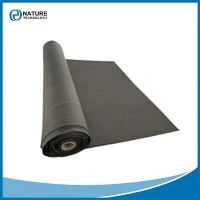


Electrode Cloth
Main Product Description
Conventional carbon-fiber electrode substrates often suffer limited reactive surface sites, gradual wettability degradation and undesirable parasitic side-reactions under long-term electrochemical cycling. To overcome these practical bottlenecks, we provide two tailored variants of CNT-functionalized carbon-fiber electrode cloth, optimized for distinct electrolyte-gas transport requirements within energy-related hardware.
Hydrophilic Variant: CVD-Grown Carbon-Nanotube Functionalized Electrode Cloth
This substrate implements catalytic chemical-vapor-deposition treatment to grow carbon nanotube nanostructures directly atop carbon-fiber filaments. The nanostructured surface delivers adjustable specific-surface-area performance, peaking at 100 m²/g with typical operational values falling within 6-12 m²/g.
In-situ grown CNT networks create permanent hydrophilic surface characteristics, which will not degrade after extended runtime. Pyrrole- and pyridine-based molecular moieties are chemically grafted onto the electrode surface. Such surface modification suppresses hydrogen-evolution parasitic reactions, cutting energy losses and raising overall electrolytic system efficiency. We can adjust weaving texture, thickness and roll dimensions according to project-specific stack design requirements.
Hydrophobic Variant: PTFE & CNT Co-Infiltrated Carbon-Fiber Electrode Cloth
Formulated for scenarios requiring durable water-repellent interfaces, this hydrophobic electrode cloth integrates polytetrafluoroethylene together with carbon-nanotube fillers throughout the carbon-fiber textile matrix. Its achievable specific surface area can reach 100 m²/g maximum, with routine working range from 9-15 m²/g.
Thanks to co-incorporated PTFE-CNT composite modification, the textile maintains consistent hydrophobic properties without performance drift under continuous cell operation. This material option suits multiple electrolytic-cell setups and fuel-cell assemblies where controlled gas-liquid separation is critical for stable operation.
Both grades are supplied in continuous roll formats. Each production batch undergoes multi-dimensional verification including surface-area characterization, sheet-resistance testing and wettability assessment before release for shipment. Custom weaving patterns and dimensional adjustments are supported for customer-tailored stack integration.


|
Item |
Unit |
Parameter |
|
Thickness |
mm |
0.6/0.8/0.9±5% |
|
Density |
g/cm³ |
0.3-0.4 |
|
Max Width |
m |
1.3-1.5 |
|
Breaking strength-warp |
N |
≥20 |
|
Breaking strength-weft |
N |
≥30 |
|
Through-plane thermal conductivity |
W/m·k |
5 |
|
Square resistance |
Ω/□ |
0.12-0.4 |
|
Carbon content |
% |
≥99.90 |
|
Liquid carrying rate |
% |
9-11 |
|
Fiber shedding rate |
% |
≤0.5 |
|
Specific surface area-Hydrophilic grade |
m²/g |
6-12 (max 100) |
|
Specific surface area-Hydrophobic grade |
m²/g |
9-15 (max 100) |
FAQ
Q: How do I select between hydrophilic and hydrophobic electrode cloth?
A: Hydrophilic cloth favors full electrolyte wetting for flow-battery electrodes. Hydrophobic cloth is preferred when stable gas-liquid separation is required for fuel-cell or special electrolyzer stacks.
Q: What customization options are supported for this electrode textile?
A: We can adjust thickness, width, weaving texture and surface-area targets according to your stack test requirements.
Hot Tags: electrode cloth, China, manufacturers, suppliers, factory, buy, price
Previous
No InformationYou Might Also Like


Send Inquiry