


Coconut shell activated carbon, as an efficient material in the field of water treatment, stands out among many types of activated carbon due to its unique physical and chemical properties, especially in the treatment of drinking water, demonstrating significant advantages.
The following is a detailed explanation of several core advantages of coconut shell activated carbon:
Excellent microporous structure, efficient adsorption of small molecules
Each starting carbonaceous material has inherent properties of forming internal pores of different size ranges. Generally speaking, coal based carbon often forms various pore sizes (depending on the type and degree of activation). Coconut shell carbon tends to have higher pore volume in the micropore region and slightly lower pore volume in the macropore region. This is because coconut shell activated carbon has higher strength and wear resistance than coal based activated carbon.
Coconut shell activated carbon is treated with steam activation technology, which greatly optimizes its pore structure and forms a complex and dense microporous network. These micropores are not only numerous, but also evenly distributed, particularly adept at adsorbing organic molecules with smaller volumes. For example, it can effectively adsorb harmful compounds such as trihalomethanes (such as chloroform), trichloroethylene, carbon tetrachloride, and MTBE (methyl tert butyl ether). These pollutants are often difficult to effectively remove by other types of activated carbon, but coconut shell activated carbon, with its high adsorption energy and toughness of micropores, can tightly retain these small molecules, ensuring the safety and purity of water quality.
High hardness, extended service life
Compared to coal, lignite, and peat based activated carbon, coconut shell activated carbon has higher hardness and wear resistance. This feature is particularly important during transportation, handling, and final use. Hard coconut shell activated carbon can reduce fine particles and dust generated during transportation due to vibration and friction, avoiding dust problems caused by fine particle detachment, and also reducing the demand for dust removal equipment. In addition, the high hardness characteristic also enables coconut shell activated carbon to maintain good structural stability during long-term use, thereby extending its service life, reducing replacement frequency and cost.
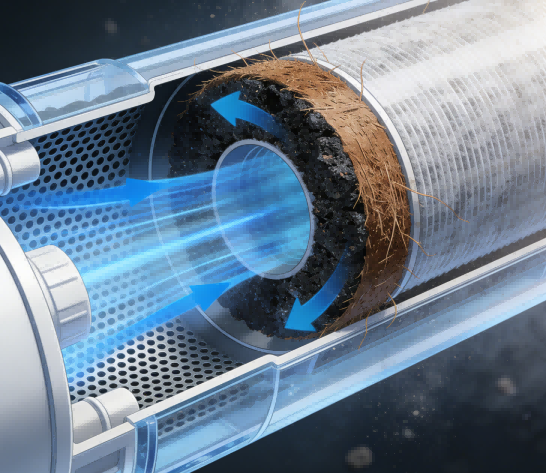
Environmentally friendly and renewable, with a green and pollution-free production process
The raw material for coconut shell activated carbon comes from naturally grown coconut trees, which are a renewable resource. In the preparation process, coconut shell activated carbon mainly adopts steam activation method, avoiding chemical treatment steps such as acid washing, thereby reducing environmental pollution and ecological damage. Compared with activated carbon that requires mining and may be accompanied by chemical treatment such as coal and lignite, the preparation process of coconut shell activated carbon is more environmentally friendly and sustainable. This feature not only meets the current global pursuit of green and low-carbon products, but also provides users with a more reassuring and reliable water treatment solution.
In summary, coconut shell activated carbon has an irreplaceable position in the field of drinking water treatment due to its unique advantages such as excellent microporous structure, high hardness, and environmental sustainability. Choosing coconut shell activated carbon as a water treatment material not only ensures the safety and purity of water quality, but also promotes the sustainable development of resource recycling and environmental protection.
https://www.naturecarbon.com/coconut-shell-activated-carbon/


