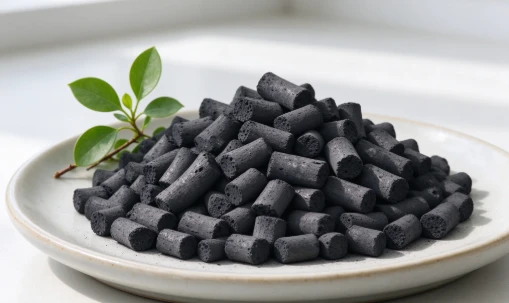
Desulfurization activated carbon is a specially modified adsorptive and catalytic material. With abundant microporous structures and surface active groups, it features both physical adsorption and chemical catalysis. It serves as the core raw material for dry flue gas desulfurization processes and is widely applied in air pollution control.
During production in coal-fired power plants, iron and steel smelters, coking plants, cement plants and other industrial facilities, fuel combustion generates large volumes of flue gas containing sulfur dioxide. As a major pollutant causing acid rain, sulfur dioxide, if discharged directly, will severely damage the ecological environment and corrode production equipment. After desulfurization activated carbon is loaded into the desulfurization unit, sulfur dioxide in flue gas is adsorbed inside the micropores of carbon. Under the combined effect of oxygen and water vapor, catalytic oxidation takes place, turning sulfur dioxide into sulfuric acid stored within the pores. Saturated activated carbon can be regenerated by thermal regeneration or water washing, releasing high-concentration sulfur dioxide gas. The recovered sulfur dioxide can be used to produce sulfuric acid, liquid sulfur dioxide or sulfur, converting pollutants into usable chemical raw materials and realizing the recycling of sulfur resources, which is in line with the concept of circular economy.
Desulfurization activated carbon is capable of simultaneous removal of multiple pollutants. While removing sulfur dioxide, it can also capture dust, heavy metals, volatile organic compounds and part of nitrogen oxides in flue gas. One set of desulfurization system can handle multiple pollutants at the same time, cutting equipment investment and simplifying the treatment process. Compared with the traditional limestone-gypsum wet desulfurization method, activated carbon desulfurization is a dry process. It produces almost no wastewater during operation and avoids gypsum residue accumulation, resulting in less secondary pollution. It is especially suitable for environmental upgrading of enterprises in water-scarce regions.
Besides flue gas desulfurization, desulfurization activated carbon is also widely used for hydrogen sulfide removal from biogas, landfill gas, natural gas and coal chemical feed gas. Hydrogen sulfide is highly corrosive; it rusts pipelines, compressors and burners, and is toxic and foul-smelling. Activated carbon efficiently removes hydrogen sulfide, protects downstream equipment and prevents the formation of sulfur oxides from gas combustion, ensuring safe gas transmission and utilization.
This material can be regenerated repeatedly with low consumption and stable performance, adapting to sulfur-containing waste gas of varying concentrations and temperatures. With increasingly stringent environmental emission standards, desulfurization activated carbon, characterized by environmental friendliness, recyclability and multi-pollutant treatment capacity, has become a preferred material for industrial waste gas treatment. It helps enterprises meet emission standards steadily, reduce air pollution and contribute to the continuous improvement of the ecological environment.